0:00
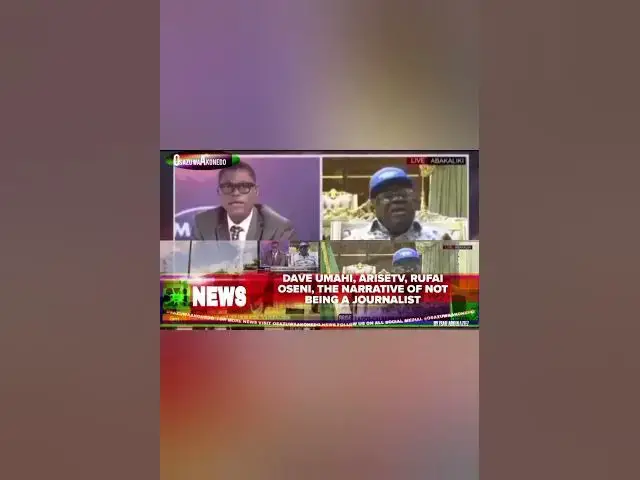
Whenever controversies surround Rufi,
0:03
the outspoken and fearless broadcaster
0:05
on Arise television, one recurring
0:07
argument often resurfaces in public
0:10
discourse. The claim that Rufi is not a
0:13
journalist, critics are quick to
0:15
emphasize that he lacks a formal
0:17
academic background in journalism,
0:19
having originally trained in animal
0:21
anatomy. But beyond the semantics of
0:23
qualification, a deeper question
0:25
emerges. What truly defines a
0:27
journalist? And what are the core
0:29
functions of journalism in society? As
0:32
mass communication teacher, we teach
0:34
students from the very first class that
0:36
the media exists to inform, educate,
0:39
entertain, and preserve cultural
0:41
heritage. Journalists also play the
0:44
crucial roles of agenda setting and
0:46
acting as watchd dogs, holding public
0:48
officials accountable and amplifying the
0:50
voices of the government. The media's
0:53
capacity to shape national conversations
0:55
is immense. By highlighting specific
0:58
issues and giving them prominence,
1:00
journalists help raise awareness and
1:02
influence public perception. It is
1:04
through such agenda setting functions
1:06
that societies engage in dialogue,
1:09
debate and reform, thereby playing
1:11
participatory role in the process of
1:14
governance. When examined through this
1:16
functional lens, it becomes clear that
1:18
Rufi has consistently fulfilled these
1:21
journalistic responsibilities over the
1:23
years. His incisive questioning,
1:26
fearless commentary, and commitment to
1:29
public accountability have made him one
1:31
of the most recognizable broadcast
1:33
personalities in contemporary Nigerian
1:35
media. A notable example is his now
1:38
famous exchange with the Minister of
1:40
Works, Engineer Dave Yumi, on Arise
1:43
Television. Before that encounter, few
1:46
Nigerians had publicly interrogated the
1:49
cost per kilometer of road construction
1:51
projects executed by government
1:53
agencies. While the minister initially
1:56
dismissed Rufi's question as elementary,
1:59
the issue soon gained traction
2:00
nationally. In fact, subsequent
2:03
clarifications by Yumi and even a public
2:06
response by Oyo State Governor Sei
2:09
Marinde demonstrated that Aseni's line
2:11
of questioning had forced an important
2:14
accountability conversation into the
2:16
mainstream. Through this singular act,
2:19
Rufi did what the media are mandated to
2:21
do. hold power accountable, enlighten
2:24
the public, and stimulate civic
2:26
engagement. It is true that a formal
2:28
qualification, such as a diploma or
2:31
degree in journalism, is generally
2:33
considered a prerequisite for
2:34
professional practice. Yet, history
2:38
tells a different story about the
2:39
Nigerian press. Many of the country's
2:42
most celebrated media pioneers from
2:45
Herbert McCauley to Ernest Aoli Nambi
2:47
Aziki way and obi Awalooo were not
2:50
trained journalists in the academic
2:52
sense. Nevertheless, through passion,
2:55
intellect and experience, they became